GUIDE · LAWN CARE
How to Revive a Dead Lawn in 7 Days: Step-by-Step Recovery Guide
Revive a dead lawn in 7 days with this step-by-step lawn recovery guide. Fix brown grass with smart, watering, mowing, fertilizing, overseeding, and troubleshooting
If your lawn is brown right now, you're not alone, and you're not necessarily doomed. A lot of "dead lawn" situations are actually lawns that are stressed, dormant, or starving. They look rough, they feel crunchy, and they make you consider hiring an expensive lawn care service — but many lawns can rebound with the right changes.
A true lawn recovery plan has two jobs: stop the damage (watering mistakes, compaction, pests, disease, nutrient gaps), and restart healthy growth (correct mowing, better soil conditions, smart feeding, reseeding bare spots). This guide is organized by day because that's the least confusing way to do it. You want a plan you can follow.
Here's what to expect: in 7 days, you can absolutely see meaningful improvement, especially if your lawn is dormant or stressed. If parts are truly dead, you can still make big progress in 7 days, but new grass needs time to germinate and establish. The goal is moving toward healthier grass steadily rather than expecting an instant turnaround.
Day 0: Diagnose Before You Treat
Day 0 is the difference between "I fixed it" and "I made it worse." Before you water, mow, or feed anything, figure out which problem you actually have.
What you'll need
Most lawn recovery work uses basic tools you probably already have: a hose or sprinkler (or an irrigation timer), a screwdriver for the soil moisture test, a rake for pulling up dead material, and a mower with a sharp blade. If you're planning to reseed bare spots, grab grass seed, a little topsoil or compost for light coverage, and something to spread seed evenly.
Optional but helpful: a soil test kit, a core aerator (or a rental), and a lawn spreader or a reliable sprayer for liquid fertilizer.
Dead vs dormant: three quick tests
The tug test. Grab a small patch of brown grass and tug gently. If it resists and feels anchored, it may be dormant or stressed. If it lifts easily like loose straw, that area is more likely dead.
The crown test. Part the grass near soil level. If you see any green at the base or near the crown, it's often not fully dead. Dormant grass can look awful above ground while still having life in the crown.
The soil moisture test. Push a screwdriver into the soil. If it's hard to penetrate, your lawn may be dry, compacted, or both.
Diagnose the cause
Most "fix brown grass" scenarios come from a short list of repeat offenders. Read the table, then write down your best guess. You don't need perfect certainty, but you need a likely cause so you don't treat symptoms while the root problem keeps blocking improvement.
| Likely cause | What it looks like |
|---|---|
| Underwatering / drought stress | Widespread browning, dry soil, footprints linger |
| Overwatering / poor drainage | Mushy areas, thinning turf, possible fungus |
| Compaction | Water runs off, high-traffic areas fail first |
| Thatch buildup | Water and fertilizer can't penetrate; lawn stays weak |
| Fertilizer burn | Sharp lines or patches that worsened after feeding |
| Pet urine | Small circular burn spots, often with darker ring |
| Disease | Patches that spread; may show lesions or odd patterns |
| Grubs / insects | Sod feels loose in patches; animals may dig |
Optional but powerful: a soil test
If your lawn "dies" in the same way each season, a soil test saves time. It can reveal pH problems and nutrient gaps that make recovery harder than it needs to be.
Grass type matters
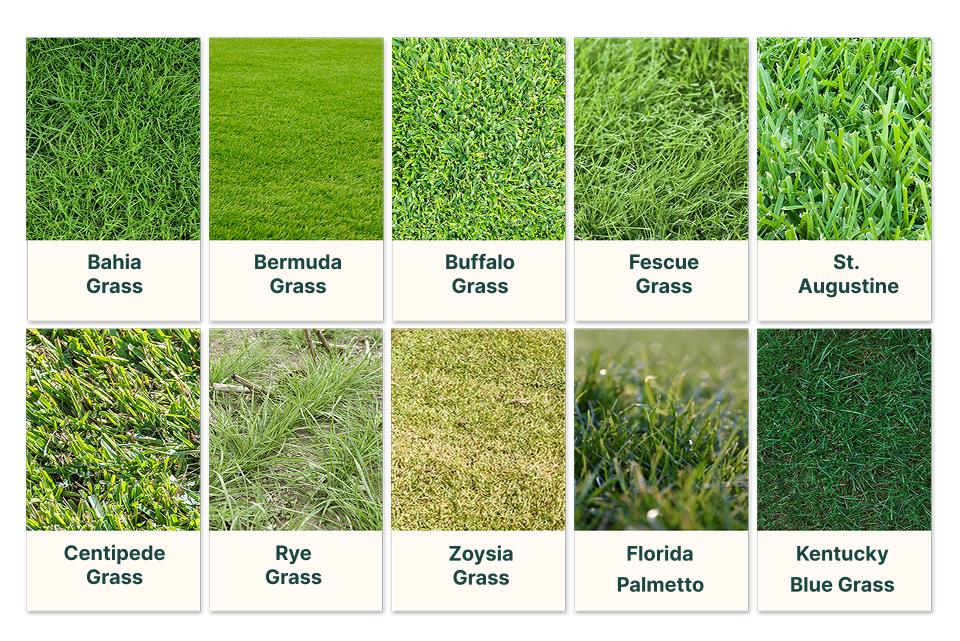
Cool-season grasses (fescue, bluegrass, rye) usually rebound best in cooler weather and may struggle more in peak summer heat. Warm-season grasses (bermuda, zoysia, St. Augustine) often go brown or dormant in cool conditions but bounce back quickly once temperatures rise. If you're unsure what you have, match your recovery expectations and seeding timing to your grass type.
Day 1: Reset Watering
Most lawns don't die from a lack of effort. They die from well-meaning routines that don't match how grass actually grows.
The deep-and-smart watering plan
A simple baseline goal for many lawns is around 1 inch of water per week from rain plus irrigation, adjusted for heat, soil type, and grass type.
The key is deep and less frequent watering for established grass. It encourages deeper roots, reduces constant surface moisture that can invite disease, and helps lawns handle heat better.
If you have clay soil or see runoff, use cycle-and-soak: water for a short time, pause 20 to 30 minutes, then water again.
Example cycle-and-soak schedule
Run your sprinklers for 10 minutes, pause for 30 minutes to let water soak in, then run another 10 minutes. If you still see runoff, shorten the cycles and add another round. The goal is slow soaking, not water racing down the driveway.
Uneven sprinkler coverage is one of the sneakiest reasons people can't revive a dead lawn. You water "a lot" — but the worst patches stay dry.
Water early, not late
Early morning watering is usually best. Night watering can leave grass wet for long periods, which can increase disease risk. Midday watering wastes water to evaporation.
Quick sprinkler audit
Run your sprinklers and watch the coverage for 10 minutes. Are there dry corners? Are sidewalks getting most of the water? Are some zones weak? Take a few minutes to fix coverage now and the rest of this guide will work harder for you.
Day 2: Mow, Rake, and Clear the Blockers
Today is about removing what's preventing recovery: matting, dead material, and bad mowing habits that keep your lawn stressed.
Mow correctly — don't scalp
Follow the one-third rule: don't remove more than one-third of blade height in one mow. Use a sharp blade — dull blades tear grass, which increases stress and slows recovery. If the lawn is really struggling, mow a bit higher than normal. Taller grass shades soil and helps retain moisture.
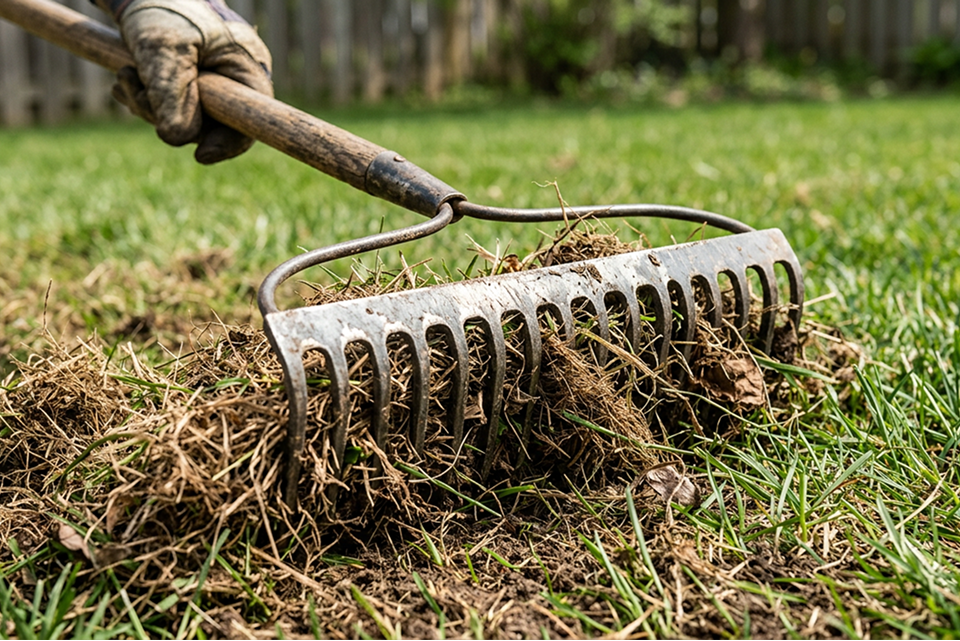
Rake out dead material
Rake gently but thoroughly in dead-looking areas. You're trying to remove straw-like dead grass, reduce thatch buildup, and expose a little soil so water and air can move better. This step also sets you up for Day 5 if you need to seed bare spots.
Clear debris and improve airflow
Remove leaves, sticks, and anything that blocks light and airflow. Grass is a plant, not a carpet. It needs breathing room.
Day 3: Relieve Compaction
If your soil is compacted, it's like trying to fix a houseplant while keeping it in a sealed jar. Water and nutrients can't move properly, and roots can't expand.
Signs you're dealing with compaction
Water puddles or runs off quickly. Soil feels hard and dense. Grass struggles most in traffic lanes, play areas, and paths. If two or more of those apply, compaction is part of your story.
Best fix: core aeration
Core aeration removes soil plugs and creates channels for better water infiltration, improved oxygen flow, and stronger root growth. If you can't aerate today, schedule it. Even one aeration per year can dramatically improve recovery in compacted yards.
Bonus: light topdressing
A thin layer of compost after aeration (or even without it) can help soil structure over time. Keep it light. You're improving soil, not burying grass.
Day 4: Feed Smart
This is the day many people get wrong by going too heavy, too soon, or fertilizing a lawn that can't actually use it yet.
Note: PetraMax manufactures the fertilizers recommended in this guide. We've formulated them specifically for lawn recovery scenarios like the one you're facing, and we stand behind their effectiveness.
Safety and PPE
Before you mix or apply any lawn product, read the label for required PPE. At minimum that means gloves and eye protection. It's the easiest way to protect yourself and spray responsibly.
PetraMax Lawn Fertilizer Max: when to use it
Use PetraMax Lawn Fertilizer Max when your lawn looks generally weak, thin, or pale; when you want balanced support for overall lawn recovery; or when you're trying to rebuild consistent growth. This is your "steady improvement" option.
PetraMax Nitrogen Fertilizer Max: when to use it
Use PetraMax Nitrogen Fertilizer Max when you want a stronger push on green-up and growth, when your lawn needs visible color improvement, or when you're trying to thicken up recovering turf. Nitrogen helps drive chlorophyll, but more is not always better — follow label rates and water in properly to reduce burn risk.
How to apply without regret
Apply when the lawn is not severely heat-stressed. Apply evenly and at label rate. Water in as directed. If you plan to overseed bare spots soon, avoid combining seed work with products that interfere with germination.
Day 5: Repair Bare Spots
This is the "new grass begins" day for areas that are truly dead.
Prep the patch
You want seed-to-soil contact. That's everything. Rake out dead grass and loosen the top layer. Add a light layer of compost or topsoil if needed. Level the surface.
Seed and light cover
Spread seed over the area, then lightly rake it in. Top with a thin layer of compost or peat moss to help hold moisture.
Watering schedule for new seed
New seed needs frequent light moisture at the surface. Water lightly 1 to 2 times per day (depending on heat and wind) to keep the surface moist, not soaked. Once germination begins and roots establish, transition toward deeper watering.
This step is often why people fail to fix brown grass: they water established turf correctly but forget that new seed needs a different approach.
Day 6: Spot-Treat the Underlying Problem
Now that the lawn is recovering, address the cause you identified on Day 0.
If weeds took over
Weeds crowd out grass and steal resources. Spot-treat where possible, and avoid blanket treatments that interfere with new seed if you overseeded on Day 5.
If disease is likely
Signs can include spreading patches, odd discoloration patterns, or lesions. Disease often ties back to watering timing, mowing height, and airflow. Correct the cultural issues first, then treat if needed.
If grubs or insects are suspected
If patches lift easily and wildlife is digging, grubs may be involved. Confirm before treating, then follow appropriate control timing and instructions.
Day 7: Lock In the Routine
Day 7 is where you prevent the "two-week relapse."
The simple weekly routine
Water smart (deep for established turf, frequent light watering for new seed areas). Mow properly (sharp blade, don't scalp). Watch patterns (dry corners, traffic lanes, repeat spots). Keep notes on what you changed and what improved.
Take photos and track progress
It sounds silly until it isn't. Photos help you notice improvement and catch problems early.
What Recovery Actually Looks Like
"After my irrigation timer failed during a July heat wave, my lawn went dormant and turned brown. Using the 7-day recovery plan and PetraMax Lawn Fertilizer Max, I saw a visible green-up in a little over a week and eventually a full recovery." — Sarah M., Phoenix, AZ
"My lawn became thin and yellow following extreme heat and heavy rain. I followed the 7-day plan and spot-treated problem areas with PetraMax Liquid Iron Max, noticing stronger color and more even growth within two weeks." — James R., Raleigh, NC
Troubleshooting
Why are there brown patches even though the rest is improving?
Common causes: uneven sprinkler coverage, compaction in one zone, pet urine, fungus, grubs, or fertilizer burn. Walk the patch, dig in two inches, and check what's different about that area versus the parts that are recovering.
My routine is correct but nothing changes — now what?
Re-check the cause. Compaction and drainage issues can block all progress until they're fixed. Consider a soil test if this is a repeating pattern.
FAQ
Can dead grass grow back?
If it's truly dead, the existing blades won't regrow. The area can recover through reseeding or sod. If it's dormant, it can green back up once conditions improve.
How long does it take to fix brown grass?
Some lawns show improvement in a week with correct watering and feeding. Bare patches that require seed take longer because germination and establishment take time.
Should I fertilize a stressed lawn right away?
Only if the lawn can actively respond and you can water it in properly. If it's severely heat-stressed, correct watering first, then feed.
What's better for lawn recovery — fertilizer or seed?
It depends. If grass is present but weak, fertilizer helps. If the area is bare or dead, you need seed (or sod) to replace missing turf.
How do I avoid making it worse?
Don't scalp. Don't overwater daily. Don't blast fertilizer above label rates. Diagnose first, then treat.
Why is my lawn still brown after watering?
If the grass is dormant or heat-stressed, it can take time and consistent deep watering before you see a color change. If the grass is truly dead, watering won't bring those blades back. Also check for uneven sprinkler coverage, compacted soil, or thatch that's preventing water from reaching the root zone.
Why is my grass still brown after fertilizer?
Fertilizer doesn't create instant green-up if the lawn is too stressed to use it, if watering isn't consistent, or if the issue is actually compaction, disease, grubs, or poor drainage. Overapplying can cause fertilizer burn, which keeps grass brown or worsens patchiness. Stick to label rates, water it in properly, and if color doesn't improve after 7 to 14 days, re-check the underlying cause.
Your 7-Day Lawn Recovery Checklist
If you want to revive a dead lawn, fix brown grass, and build real recovery, the fastest path is a plan you can actually follow:
- Day 0: Confirm dead vs dormant and identify the cause
- Day 1: Reset watering
- Day 2: Mow correctly and rake out blockers
- Day 3: Relieve compaction
- Day 4: Feed smart (PetraMax Lawn Fertilizer Max or PetraMax Nitrogen Fertilizer Max)
- Day 5: Seed bare spots and keep them consistently moist
- Day 6: Treat the root issue (weeds, disease, insects, drainage)
- Day 7: Lock in the routine and keep going